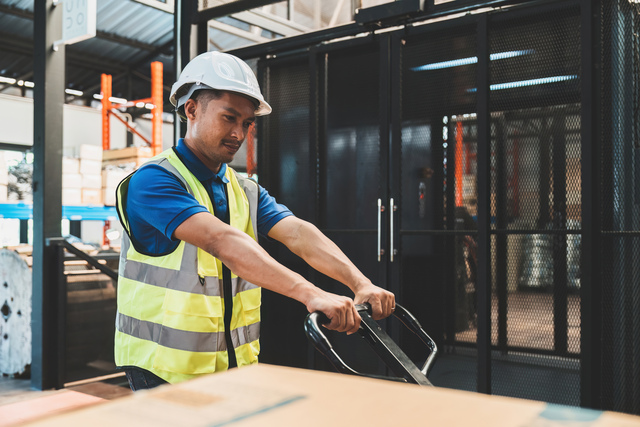
The landscape of contemporary industrial construction is experiencing a significant transformation, moving away from conventional on-site assembly to more efficient off-site solutions. At the heart of this transformation are packaged plant rooms, showcasing an advanced approach to the integration of mechanical and electrical services in large-scale developments. These self-sufficient units contain the necessary machinery for heating, cooling, power, and water management, all within a custom enclosure. Transitioning the intricate assembly process from a disordered construction site to a regulated factory setting has established packaged plant rooms as a fundamental element of modern engineering achievement.
In today’s economic environment, the pace of project delivery is frequently as important as the quality of the construction itself. Packaged plant rooms provide a significant benefit in this context. Conventional approaches require numerous contractors competing for limited space in a confined basement or rooftop, resulting in unavoidable delays and logistical challenges. When a project employs packaged plant rooms, manufacturing occurs simultaneously with groundworks and structural assembly. This coordinated workflow guarantees that when the building is prepared to accept its mechanical services, the packaged plant rooms have been thoroughly tested and are ready for immediate installation.
The reliability of packaged plant rooms is greatly enhanced by the precision provided in a factory-controlled environment. In a specialised manufacturing facility, experienced technicians operate in ideal conditions, shielded from the erratic UK weather and the debris of an active construction site. This enables a standard of quality control that is nearly unattainable in the field. Each pipe, valve, and control panel in these packaged plant rooms is installed to precise specifications, frequently utilising cutting-edge robotic welding or laser-guided alignment techniques. The outcome is a remarkably sturdy system that operates precisely as intended from the instant it is activated.
Safety is a critical priority in every industrial sector, and the implementation of packaged plant rooms greatly reduces risks associated with on-site operations. Reducing the number of man-hours spent working at height or in confined spaces on-site allows developers to significantly enhance their safety statistics. The majority of “hot work,” including welding and soldering, is performed in a controlled factory environment, which significantly reduces the risk of fire and injury on construction sites. Additionally, the provision of packaged plant rooms minimises the frequency of individual vehicle trips to and from the site, fostering a safer and less congested atmosphere for other trades.
The spatial efficiency of packaged plant rooms is yet another factor contributing to their popularity in urban developments, where every square metre holds significant value. Design engineers can utilise advanced 3D modelling software to condense the arrangement of pumps, boilers, and heat exchangers into the most compact footprint while ensuring maintenance access is not compromised. These packaged plant rooms are typically designed for “plug and play” connectivity, allowing them to be easily installed and connected to the building’s main risers with little effort. This compact design provides architects with greater flexibility to dedicate space to revenue-generating areas instead of large mechanical floors.
Sustainability and environmental responsibility have become essential in contemporary industry, with packaged plant rooms serving a crucial function in achieving green building standards. Due to their construction adhering to exact specifications, there is a notable reduction in material waste when compared to conventional on-site builds, where excess piping and cabling frequently end up discarded. Moreover, packaged plant rooms are often crafted to accommodate high-efficiency technologies such as heat pumps and combined heat and power units. The sealed and insulated structures of these packaged plant rooms effectively minimise noise pollution and heat loss, safeguarding the local environment and enhancing overall energy ratings.
The commissioning phase of a project can be particularly challenging for a site manager; however, packaged plant rooms significantly reduce this stress. Every unit is subjected to thorough factory acceptance testing prior to departing from the manufacturing floor. The electrical circuits, pressure levels, and software configurations within the packaged plant rooms are thoroughly verified and signed off beforehand. Upon the arrival of the packaged plant rooms on-site, the commissioning process shifts from a lengthy endeavour to a streamlined series of final checks and balances, facilitating the building’s operational readiness much sooner than would typically be achievable.
The packaged plant room concept is characterised by its flexibility, enabling customisation to cater to the unique requirements of various sectors, including healthcare and data centres. In a hospital setting, packaged plant rooms may be designed with redundant systems to guarantee a continuous supply of medical gases and maintain climate control. In contrast, for a sizable industrial warehouse, the packaged plant rooms may prioritise high-capacity fire suppression and robust ventilation systems. This tailored approach guarantees that regardless of the application, the packaged plant rooms are suitable for their intended use and able to meet the specific requirements set by the end-user.
The use of packaged plant rooms also streamlines maintenance and long-term asset management. The layout, crafted for optimal access by the original engineers, significantly simplifies equipment servicing for future technicians. Numerous packaged plant rooms are now designed with integrated smart sensors that transmit data to a central building management system. This enables predictive maintenance, allowing for the identification and rectification of potential issues within the packaged plant rooms before they result in a system failure. The equipment’s lifespan is consequently prolonged, offering an improved return on investment for the building owners.
The ease of moving one large unit instead of countless individual parts is a significant advantage of packaged plant rooms. The delivery necessitates meticulous planning and frequently involves heavy-lift cranes; however, it is a distinct event that can be arranged during off-peak hours to minimise disruption. After the packaged plant rooms are positioned onto their designated plinths, the external cladding can be completed to align with the aesthetic of the main building. This seamless integration guarantees that packaged plant rooms not only operate effectively but also harmonise with the architectural vision of the project.
The assurance of costs stands out as a particularly persuasive financial rationale for adopting packaged plant rooms. In conventional construction, unforeseen expenses like site delays, damaged materials, and extra labour hours can rapidly lead to a budget becoming unmanageable. The price for packaged plant rooms is typically established at the time of order placement. This enables financial directors and project stakeholders to predict their expenditures with a significant level of precision. The decrease in on-site overheads significantly improves the cost-effectiveness of selecting packaged plant rooms instead of traditional mechanical installation methods.
As we consider the future of the UK’s built environment, the significance of packaged plant rooms is set to increase steadily. The drive towards modular construction and “Modern Methods of Construction” harmonises seamlessly with the principles of packaged plant rooms. With the progression of technology, we can anticipate these units becoming increasingly intelligent, potentially integrating renewable energy storage solutions directly into their structure. The dependence on packaged plant rooms signifies a transition to a more professional and industrialised method of building services, emphasising performance, safety, and speed as top priorities.
Industrial facilities frequently need swift expansion or enhancements to meet market demands, and packaged plant rooms offer an ideal modular solution for this growth. When a manufacturing plant requires an increase in cooling capacity, it is much more straightforward to add extra packaged plant rooms rather than trying to retrofit new machinery into an already crowded area. The scalability of packaged plant rooms presents a compelling choice for businesses that foresee future shifts in their operational needs. The capacity to effortlessly incorporate an additional unit guarantees that the infrastructure can expand in tandem with the company.
Ultimately, the design and structural quality of the enclosures utilised for packaged plant rooms have experienced notable enhancement. These have evolved beyond simple “sheds” into high-specification structures engineered to endure extreme weather conditions while offering exceptional acoustic dampening. Packaged plant rooms, whether located on a rooftop in a bustling city center or in a secluded industrial park, are designed for durability and longevity, ensuring they endure for decades. The internal environment of these packaged plant rooms is maintained in a clean and dry state, safeguarding sensitive electronic controllers from external elements. This protective shell is essential for maintaining the functionality of the intricate heart of a building’s mechanical system over its intended lifespan.
In summary, the integration of packaged plant rooms signifies a significant advancement in the construction sector. Embracing the principles of off-site manufacturing allows businesses to attain superior quality, enhanced safety, and more dependable timelines. Packaged plant rooms serve not just as a convenience; they are a vital element of high-performance modern buildings. With the rising demand for efficient, sustainable, and rapidly deployable infrastructure, packaged plant rooms are set to lead the way in engineering innovation, delivering the power and climate control essential for the functionality of our modern world.