Nowadays, people create opinions about us in an instant and our professional networks may reach across the globe. As a result, our business introductions have evolved significantly. Something considerably more intelligent, efficient, and adaptable is subtly displacing the classic paper card, which was previously ubiquitous in every briefcase and coat pocket. One of the most game-changing developments in professional networking in the last several years is the contactless business card, and its use is skyrocketing across all sectors of the economy.
Introducing a Revolutionary Approach to Professional Profiles
The contactless business card has a beautiful, straightforward design. Thanks to near-field communication (NFC) technology or QR codes, professionals no longer have to worry about losing, damaging, or misplacing a little rectangle of printed card. Sending a contact’s information, website, social media accounts, portfolio links, and more to a recipient’s device is as easy as tapping or scanning a contactless business card with a smartphone. Nothing the receiver has to do, like install programs or manually enter data, is necessary. The interaction is instantaneous, cutting-edge, and faultless.
There is more going on here than just a technical improvement. Being environmentally conscious, forward-thinking, and responsive to the demands of a digitally linked business world are crucial messages delivered by the contactless business card. These nuanced signals mean a lot in highly competitive businesses where standing out is key.
Why Going Contactless Is the Best Choice for the Environment
The fact that a contactless business card has no effect on the environment is a strong argument in their support. There is a massive annual production of traditional paper business cards throughout the world, and many of those cards end up in the trash a few days after receipt. Waste from paper, ink, and energy used in printing adds needlessly to environmental constraints that companies are under growing criticism for trying to alleviate.
Thanks to the contactless business card, this loop is completely broken. Reprints are unnecessary for a single card consisting of materials like PVC, metal, bamboo, or recycled composites; they may be used endlessly. The information associated to a professional’s contactless business card is easily updated digitally if they alter their phone number, job title, or organization. The actual card is unaltered. The transition may significantly reduce paper waste and printing expenses for organisations that distribute thousands of cards every year. Additionally, clients and partners that prioritise sustainability are becoming more interested in the environmental credentials of these businesses.
Features That Are Unmatched by Paper
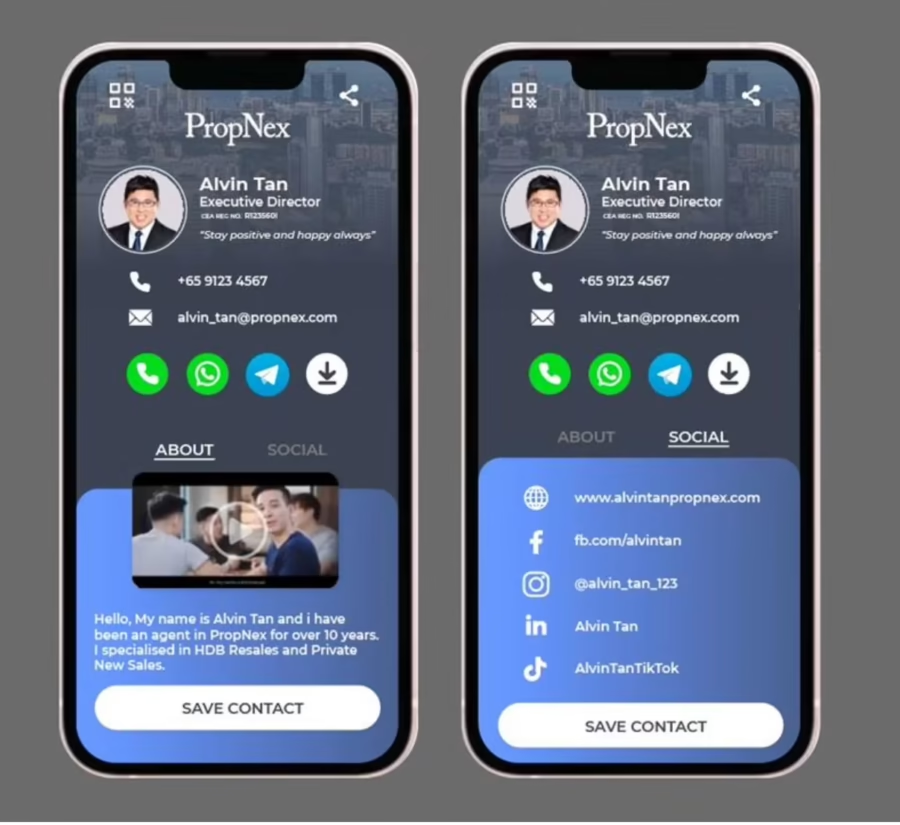
A contactless business card has several advantages over a paper card in terms of usefulness. You can only fit so much information into a little rectangle of printed card due to its physical limitations. However, with a contactless business card, you may access an abundance of data. A receiver may get a dynamic digital profile with video introductions, downloadable portfolios, booking links, social network accounts, product catalogues, and more when they touch or scan the card. The profile also provides conventional contact data.
In corporate settings where things are always changing, this adaptability is invaluable. For instance, a consultant may update their digital profile to showcase a new set of services or a recently finished project, and all of their contactless business cards will instantly reflect the change. The contactless business card is more of a dynamic professional asset than a static one since it can be adjusted in real-time, which is impossible with printed materials.
Data Analysis and Knowledge
The data that a contactless business card may generate is one of its most undervalued benefits. In contrast to paper cards, which are tossed into a person’s wallet and then forgotten, contactless business cards may be linked to analytics systems that monitor the frequency of taps, the timing of interactions, and the links that users most often interact with. Businesses and professionals may see how well their networking efforts are doing with this data.
For example, after a networking event, a salesperson may see which prospects interacted with their profile, allowing them to have more educated and timely contacts with those prospects. The most effective way for a creative worker to improve their pitch is to review their portfolio and determine which pieces were most noticed. With this sort of data-driven awareness, the contactless business card goes from being just a tool to becoming an integral part of a larger plan for business development.
Establishing a Reliable Professional Image
Any respectable company knows how crucial it is to keep their brand consistent, and the contactless business card is a key component in that effort. A lot of professionals put a lot of work into creating a professional online presence, with a clean website, consistent social media accounts, and a distinct visual identity, but then they ruin it with a paper card that is either out of date or printed poorly. With the contactless business card, you can seamlessly transition from physical to online interactions.
A contactless business card is more than just a phone number; it’s an invitation to a well crafted professional experience. The professional’s digital profile, which the card connects to, may be customised to match the brand’s colours, tone, and style, making it a natural extension of their overall identity. Companies that provide contactless business cards to their whole staff benefit greatly from this uniformity as it guarantees that all employees will represent the company in a cohesive and professional light.
Industry-Wide Adoption
The IT industry is no longer the only one to adopt the contactless business card. Its usage has skyrocketed in many other sectors, including banking, real estate, healthcare, consulting, the hotel industry, and retail. Professionals are seeing the benefits of the contactless business card in high-volume networking settings, where exchanging dozens of cards in a day is usual. Having full, accurate, and instantly available information at your fingertips is a true competitive edge in certain situations.
Many sole proprietors and small company owners are also big fans of the contactless business card. The digital profile associated with the card can provide a low-cost, expert, and easy-to-manage online presence for businesses who don’t have a full-time marketing department or a huge budget for graphic design. Compared to printed materials, which always struggled because to the high expenses of design and printing, it makes quality presentation accessible to a wider audience.
Conquering Doubts
People used to the old ways of doing things have been somewhat resistant to the contactless business card, but that’s to be expected with any new technology. A number of experts have voiced worries about the system’s over-reliance on technology, asking, “What if the receiver’s phone dies or NFC isn’t enabled?” These days, most contactless business cards have a QR code on the back to cover all eventualities, so data may be sent no matter what the receiver’s device settings are. Some people are concerned about the format’s impersonality, but in reality, it’s usually the inverse: people are more likely to strike up a discussion and remember a contactless business card because of its uniqueness and sophistication, which isn’t the case with paper cards.
Occasionally, people express worries about privacy, although these fears are usually baseless. Instead of receiving more data than they would with a regular card, the receivers of a contactless business card only receive the information that the professional decides to make public. Considering that paper cards can be handled by various individuals throughout time, the digital aspect of the transaction provides a level of security that printed materials do not.
How Business Networking Will Develop in the Future
You can see the path well. The contactless business card will keep growing in popularity as more people learn to use digital tools, sustainability becomes a higher concern, and professionals look for solutions that can do more work for them. In fact, it’s more than just a paper card substitute; it’s a radical departure from conventional wisdom about the nature of professional introductions.
Companies and people that start using contactless business cards today will be pioneers in a trend that will catch on and become the norm. By doing so, they are sending a message to their clients, partners, and colleagues that they are prepared to confidently face the future of contemporary business. The contactless business card isn’t just a passing fad in the world of professional networking; it’s the wave of the future.