Expanding insulation materials were formerly thought to be a cutting-edge way to improve thermal insulation and energy efficiency in homes and businesses. However, in recent years, financial institutions, structural surveyors, and property owners have become more aware of the serious concerns connected to poorly fitted or failing insulating materials. Polyurethane expansion materials can cause structural timber degradation, limit ventilation, trap moisture against roof timbers, and eventually make houses unmortgageable when built improperly. As a result, the building maintenance and property restoration industries have seen a sharp increase in the need for expert spray foam removal.
Spray foam removal is a highly skilled job that need for meticulous preparation, technical know-how, and specific equipment. It is far from a straightforward do-it-yourself project because a poor extraction effort can seriously harm breathable membranes, tile battens, and fragile roof systems. Property owners can gain important insight into the strict processes needed to safely restore roof timbers, maintain structural integrity, and guarantee the building stays fully compliant with structural and financial standards by learning how certified professionals handle spray foam removal.
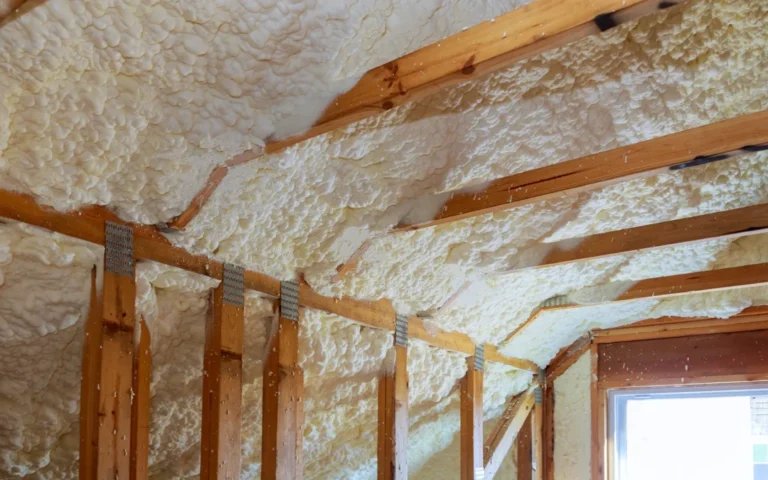
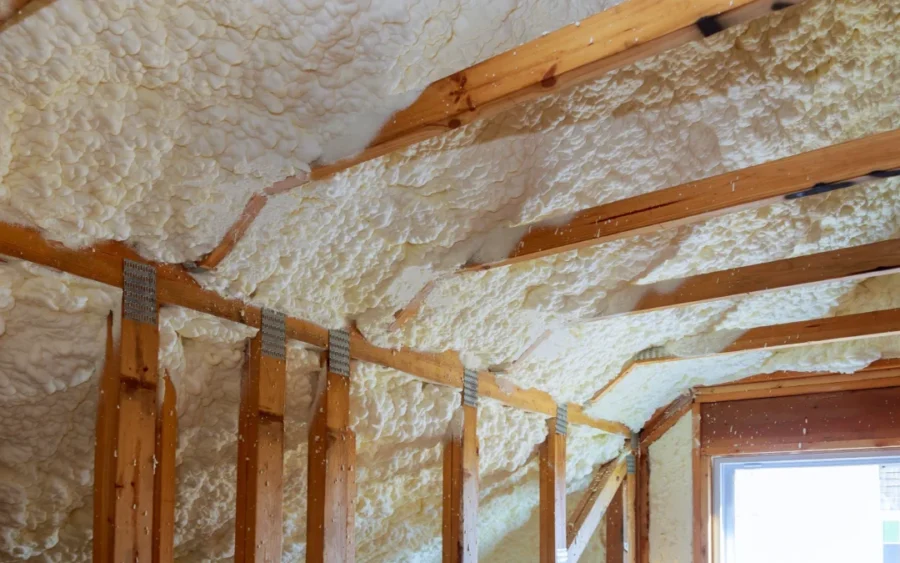
A thorough initial inspection and survey is the first step in any effective spray foam removal process. Since expanding insulation usually falls into two broad categories—open-cell and closed-cell structures—qualified specialists examine the property to identify the type of material present. Although open-cell insulation is easier to remove since it is lighter, softer, and more flexible, it still has the potential to retain moisture if it is not vented. In contrast, closed-cell insulation forms a thick, very stiff structure that sticks to roof tiles and timber rafters with tremendous strength. Technicians can create a tailored spray foam removal technique that reduces stress on the surrounding building framework by determining the precise density and composition of the substance.
Preliminary site preparation is necessary before any actual extraction operation starts in order to protect the workers and the surrounding community. Significant amounts of dust, debris, and fine airborne particles are produced during the spray foam removal procedure. Technicians carefully seal loft hatches, install protective sheeting, and create negative air pressure zones using industrial dust extraction equipment to stop contamination from spreading into dwelling areas. Additionally, during spray foam removal operations, worker safety is crucial. To protect themselves from irritants and dangerous dust particles, technicians must wear complete personal protective equipment, such as full-face respirators, protective coveralls, heavy-duty gloves, and eye protection.
The time-consuming procedure of physical extraction can start after the workspace is completely protected and ready. Technicians use a mix of specialist hand tools and precise mechanical equipment, depending on the substrate density and the particular regions of application. For open-cell material, the main technique for initial spray foam removal is frequently physical scraping using timber chisels, pulling tools, and specially curved flexible blades. In order to remove bulk debris from the wooden surfaces without gouging or fracturing the underlying wood, technicians carefully work along the sides of the roof rafters.
The procedure of spray foam removal becomes significantly more difficult and labour-intensive when dealing with inflexible closed-cell variations. Mechanical equipment like oscillating multi-tools, specialist wire wheels, and controlled scraping blades must be used with extreme accuracy because closed-cell material adheres so firmly to structural surfaces. During this stage of spray foam removal, technicians must be extremely careful not to harm tile underlayments, felt membranes, or roof battens. If this step is rushed, it may result in significant structural damage that calls for either full roof replacements or costly timber repairs.
Typically, the extraction process occurs in layers that are tightly controlled. To uncover the extent of the adhesion and reveal the timber frames, the majority of the material is removed initially. The sensitive contact where the insulation immediately clings to the roof timbers and tile underlay is where specialists concentrate after removing the main volume. Because tiny pieces of hardened material left adhered to the board may continue to retain moisture, preventing the wood from breathing normally and raising the danger of dry rot or wet rot, this secondary step of spray foam removal necessitates meticulous attention to detail.
The thorough cleaning and timber restoration stage starts once the great majority of the bulk debris has been effectively removed. Making sure that the wood surfaces are left spotless and residue-free is a crucial component of superior spray foam removal. Heavy-duty industrial vacuum cleaners with high-efficiency particulate air filtering systems are used by technicians to remove tiny dust particles and debris from eaves, joist gaps, and tight places. After vacuuming, the wooden rafters are subjected to controlled rotary sanding methods or specialised wire brushing to eliminate any remaining tiny adhesions without affecting the wood’s structural dimensions.
To improve the spray foam removal procedure, specialised dry ice blasting or soft-media shot blasting equipment are used in particular advanced settings. Pressurised carbon dioxide pellets are used in dry ice blasting; upon impact, they freeze and break the remaining link between the foam residue and the wood. This approach is very clean for fragile or historic timber buildings during spray foam removal jobs since it leaves no secondary waste product other than the dislodged foam particles, making it especially useful for complicated timber joint work.
A detailed structural and damp examination is carried out once the timbers have been completely exposed and cleaned. Finding concealed moisture damage or wood decay that happened while the roof structure was walled off from natural circulation is one of the main reasons to undertake spray foam removal. Using both physical timber probes and electronic moisture meters, technicians examine each rafter, batten, and joist. After spray foam removal, structural repairs, wood splices, or chemical preservative treatments can be used right away to restore the roof frame to full strength if localised decay or structural weakness is found.
Another crucial post-extraction step that goes along with expert spray foam removal is ventilation restoration. Soffit vents, eaves, and ridge ventilation pathways are often blocked by the first application of expanding insulation, which causes serious condensation problems. Technicians make sure that all natural ventilation channels are completely cleansed and restored as part of a comprehensive spray foam removal procedure. When necessary, tile vents or ventilation card eaves baffles are added to promote ideal circulation throughout the loft area, guaranteeing that moisture levels stay balanced and averting future condensation problems.
The last stage of any expert spray foam removal process is responsible trash management and disposal. Dislodged expansion material must be contained right away since it is heavy, light, and readily transported by the wind. Within the workstation, technicians bundle all removed waste material into sturdy, sealed disposal bags. Professional spray foam removal services work with licensed waste transfer facilities to make sure the material is transported and disposed of in strict compliance with environmental regulations because synthetic insulation materials cannot be simply disposed of in standard domestic waste streams.
In the end, maintaining structural integrity, protecting property value, and meeting lender criteria for mortgages and house insurance all depend on spending money on expert spray foam removal. Even though the procedure is unquestionably difficult, labour-intensive, and demanding, hiring knowledgeable experts guarantees that the material is securely removed without causing harm to sensitive structural components. Professional spray foam removal effectively restores the building structure to a healthy, breathable, and structurally sound state for years to come through careful evaluation, careful manual and mechanical extraction, complete wood cleaning, and appropriate ventilation restoration.
Get in Touch:
Countrywide Roofing & Insulation
1st Floor, Colonnade House, 2 Westover Rd, Bournemouth BH1 2BY, United Kingdom
01202 942777
countrywideinsulation.co.uk