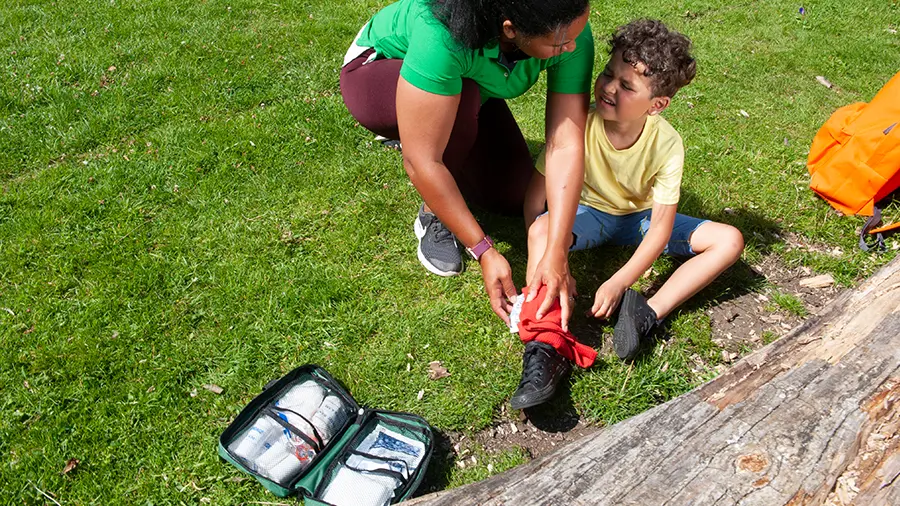
The United Kingdom’s childcare provision is subject to rigorous regulations that are intended to guarantee the safety and well-being of children in professional care environments. Childminders are required to complete a specialist and exhaustive first aid course for childminders, which is a fundamental component of professional childcare practice. This requirement is at the heart of these requirements. The Government’s dedication to upholding the most stringent child safety standards in all registered childcare environments is evidenced by these legal obligations.
The legal requirements for childminders operating in England are founded on the Early Years Foundation Stage (EYFS) statutory framework. Every registered childminder is required to maintain the presence of at least one individual who possesses a legitimate paediatric first aid certificate on the premises at all times while the children are under their care, in accordance with the current EYFS regulations. This requirement encompasses any assistants who may be left in sole responsibility of children for any period during the working day, in addition to the primary childminder. The first aid course for childminders must emphasise paediatric techniques, recognising that children necessitate distinct emergency care approaches from adults.
The statutory framework requires that the first aid course for childminders consist of a comprehensive twelve-hour training program that is conducted over two days. This extensive duration guarantees that childminders are provided with a comprehensive understanding of all critical first aid procedures that are pertinent to young children. The course content must comply with the criteria established by the Department for Education and Ofsted, which encompass critical areas such as medical emergencies that may occur in childcare settings, burn treatment, head injuries, choking procedures, and infant and child resuscitation.
One of the most significant aspects of the legal requirement is that the first aid course for childminders cannot be completed solely through online learning. Although some theoretical components may be delivered remotely, the practical components must be completed in person with qualified instructors. The purpose of this requirement is to guarantee that childminders acquire practical proficiency in critical life-saving techniques, including the management of choking incidents and the cardiopulmonary resuscitation of infants and children. The practical nature of these skills requires direct supervision and assessment by certified trainers who can verify competency levels.
The legal framework also imposes stringent renewal requirements for the first aid course for childminders. Childminders are required to complete renewal training in order to maintain their registration, thereafter, certificates are valid for three years from the date of completion. This renewal cycle acknowledges the fact that first aid protocols and techniques are subject to change over time, and it guarantees that childminders are up-to-date with applicable best practice guidelines. A childminder’s registration may be suspended or revoked by Ofsted if they fail to maintain a current certificate, which would effectively prohibit them from continuing to operate.
The legal obligations extend to any assistants employed within the childminding service in addition to the primary childminder. A valid paediatric first aid certificate must be held by any individual who may be temporarily in control of children. This certificate is obtained by completing a childminder first aid course. This requirement recognises that emergencies may arise at any moment and guarantees that qualified first aid is consistently provided, irrespective of personnel arrangements.
The implementation of these legal obligations is especially critical during excursions and travels. The EYFS framework explicitly mandates that a person who possesses a current paediatric first aid certificate must accompany children on any excursions that occur outside of the childminding premises. This guarantees that the same level of emergency response capability is maintained regardless of whether children are in the home environment or engaged in external activities. Consequently, the first aid course for childminders includes specialised instruction on the management of emergencies in a variety of settings and environments.
Ofsted, the regulatory body responsible for inspecting childminders, views compliance with first aid requirements during registration and ongoing inspections extremely seriously. Inspectors will confirm that certificates are valid, correctly certified, and obtained from authorised training providers. The first aid course for childminders must be conducted by organisations that adhere to the prescribed curriculum outline and meet specific accreditation standards. Potential regulatory action, such as the refusal of registration or the cancellation of existing registration, may be taken against childminders who are unable to demonstrate compliance with these requirements.
Transparency with parents and carers is also addressed by the legal requirements. Although the requirement to visibly display certificates has been eliminated by recent amendments to the EYFS framework, childminders are still required to demonstrate their first aid qualifications upon request. Rather, childminders must maintain records of their training that are easily accessible and be prepared to share this information with parents, Ofsted inspectors, or other relevant authorities when requested.
The fundamental obligation to complete a first aid course for childminders has been maintained, while recent legislative changes have clarified certain aspects of the training requirements. Although some of the previous training requirements for childminders have been relaxed or made optional, the paediatric first aid requirement remains a non-negotiable aspect of childminder registration. The Government’s recognition that first aid capability is a fundamental safety requirement that cannot be compromised is reflected in this consistency.
The financial responsibility for the completion of a first aid course for childminders is entirely borne by the individual childminder or their employer if they serve as an assistant. Discretionary initiatives, rather than legal entitlements, are supported by certain local authorities through funding or subsidised training programs. The operational costs of a childminding service must account for the cost of training and renewal, which is a necessary business expense.
The legal repercussions of noncompliance with the first aid training requirements are severe. Childminders who neglect to preserve their current certification will have their registration suspended immediately, rendering them incapable of providing child care until they comply. Childminders may be subject to criminal charges under health and safety legislation and civil liability for any resultant harm to children in their care in the event that serious incidents occur and an investigation reveals inadequate first aid provision.
The legal framework that governs the first aid course for childminders is a comprehensive approach to child safety that effectively balances professional obligations with practical implementation considerations. These regulations guarantee that all children in registered childcare receive the assistance of adults who have been trained to respond effectively to medical emergencies, thereby establishing a strong safety network that benefits both the children and their families. The professional status of qualified childminders throughout England is reinforced by the ongoing emphasis on practical competency assessment and regular renewal, which preserves the integrity of these essential safety provisions.