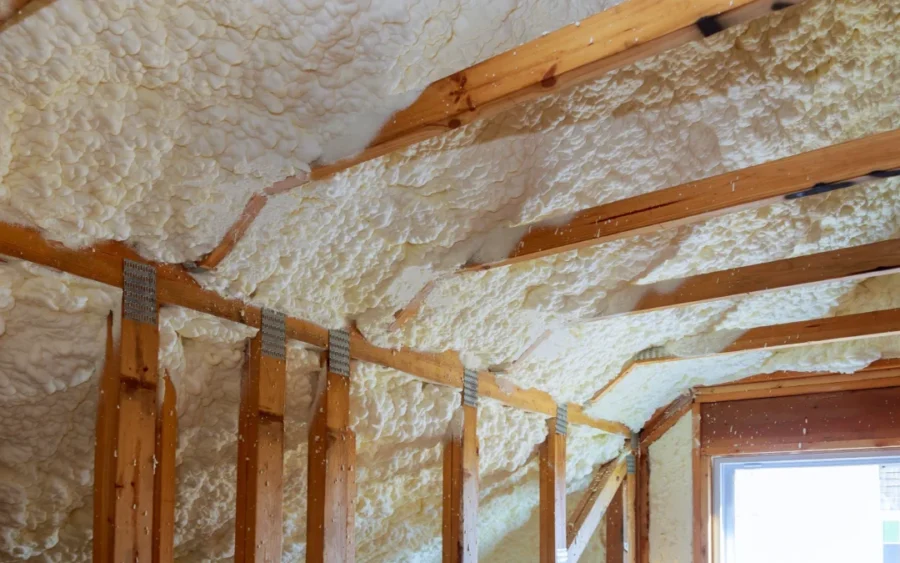
In the realm of contemporary home insulation, spray foam has been celebrated as a remarkable solution. Its capacity to expand, seal, and insulate has rendered it a favoured option for lofts, walls, and roofs throughout the United Kingdom. However, what occurs when this inflexible, sealed material needs to be removed? Whether caused by a roof leak, a structural alteration, a poorly executed initial installation, or a property sale that necessitates its removal, the process of extracting this material is quite complex. It is a complicated, risky, and technically challenging task that should never be undertaken by a homeowner or a general contractor. The straightforward reality is that professional spray foam removal is not merely a suggestion; it is an essential requirement for safety and structural integrity.
The primary and most persuasive reason to entrust spray foam removal to professionals is the significant health risk it presents. When spray foam is installed, it consists of a liquid mixture of isocyanates and polyol resin. Once cured, it is typically regarded as inert. However, the removal process entails cutting, grinding, sawing, and prying the rigid foam away from timber, brick, and concrete. This mechanical action produces a fine, toxic dust. This dust is not just an irritant; it contains isocyanates, which are recognised as respiratory sensitisers. Inhaling this dust can lead to serious asthma attacks, chemical pneumonitis, and lasting lung damage. A professional team engaged in sprayfoam removal will be outfitted with full-face respirators featuring P3 filters, disposable coveralls, and gloves. They will utilise industrial-grade negative air machines to establish a hoover environment, ensuring that the toxic dust is captured at the source and does not spread to the rest of the property. A DIY attempt, even with a basic dust mask, poses a significant risk for chronic respiratory illness.
In addition to the immediate health hazards, the structural integrity of the building faces significant risks during the removal of spray foam. Sprayfoam bonds with remarkable strength to nearly any surface. It is not merely positioned within a cavity; it is chemically bonded to the roof tiles, the rafters, the wall studs, and the floor joists. Trying to remove it without the proper understanding can quickly result in severe damage. A professional team comprehends the precise tensile strength of the foam and the load-bearing capacity of the underlying structure. Specialised tools, including industrial foam cutters and low-impact chisels, are employed to detach the foam from the substrate, ensuring that the timber or masonry remains free from gouges, splinters, or cracks. In a roof, for instance, forceful sprayfoam removal can break a rafter, resulting in a sagging roof line or, in the most severe cases, a partial collapse. The expense associated with repairing such structural damage significantly surpasses the cost of employing a professional for the initial spray foam removal.
Furthermore, the process of spray foam removal is not merely a matter of pulling and discarding. It involves a forensic analysis aimed at determining the specific type of foam used and the technique employed for its application. There are two main types: open-cell and closed-cell. Open-cell foam is softer and may be removed with less force; however, it is frequently found deeply embedded in crevices. Closed-cell foam is extremely rigid, impervious to water, and highly dense, resulting in a challenging and labour-intensive removal process. A professional will initially perform a comprehensive survey to assess the type of foam, its thickness, and the condition of the underlying substrate. This assessment determines the complete removal strategy. For example, if the foam were applied directly to the underside of roof tiles, the removal process would need to be exceptionally careful to prevent breaking the tiles, which would subsequently necessitate a complete roof replacement. A professional team possesses the expertise to determine the precise amount of force to apply and the appropriate moment to transition to an alternative technique, thereby ensuring the integrity of the building fabric is maintained.
Another important aspect that only a professional can handle is the disposal of the waste. Sprayfoam removal produces a significant amount of contaminated debris. This is not typical household waste that can be discarded in a skip. The dust and chunks of foam are categorised as hazardous waste in the UK because of the presence of isocyanates and other chemical residues. A reputable company will possess a registered waste carrier licence and will issue a comprehensive waste transfer note, detailing the chain of custody from your property to a licensed hazardous waste facility. They will utilise robust, sealed bags along with industrial hoover loaders to effectively contain the dust. A DIY removalist would violate the law by disposing of this material in a standard landfill, and they would face substantial fines. Furthermore, they would be introducing toxic dust into their own vehicle and home during transport.
The time and cost implications of a DIY approach are often significantly underestimated. What a skilled team can accomplish in just two or three days with industrial vacuums, air scrubbers, and specialised cutting tools may require a homeowner weeks of strenuous and hazardous work. The cost of renting the necessary equipment—industrial HEPA vacuums, negative air machines, full-face respirators, and specialist cutting blades—is excessively high for a single job. When you consider the expense of replacing damaged roof timbers, fixing torn plasterboard, and the possible medical bills from inhaling toxic dust, the alleged savings of a DIY project disappear completely. Professional spray foam removal is an investment that represents a fixed, predictable cost, ensuring a safe, clean, and structurally sound outcome.
Lastly, we must address the matter of insurance and liability. Most standard home insurance policies clearly state that they do not cover damage resulting from the DIY removal of insulation materials. If you try to remove spray foam on your own and end up causing a roof leak, a structural collapse, or a fire (due to sparks from cutting tools near timber), your insurance provider will probably deny your claim. Additionally, if you are selling your home, a surveyor will quickly identify any poorly executed removal work. This will diminish the property’s value and raise significant concerns for prospective buyers. A professional spray foam removal company will issue a certificate of completion along with a guarantee that the work has been performed in accordance with industry standards. This documentation is essential when selling a property, as it offers reassurance to both the buyer and the mortgage lender.
In conclusion, the temptation to save money by attempting sprayfoam removal on your own is a misleading and risky notion. The process is not merely a demolition task; it is a high-risk, technically challenging operation that encompasses toxic dust, structural fragility, hazardous waste, and intricate legal obligations. The health risks—permanent lung damage from isocyanate dust—should be sufficient to dissuade any reasonable individual. The possibility of inflicting thousands of pounds in structural damage to your home is equally significant. Only a qualified, insured, and adequately equipped professional team has the expertise, the tools, and the safety measures to carry out spray foam removal in a safe and effective manner. When confronted with the challenging task of removing this stubborn material, the most sensible decision is to take a step back, reach for the phone, and enlist the help of professionals. Your health, your home, and your financial future are all at stake.