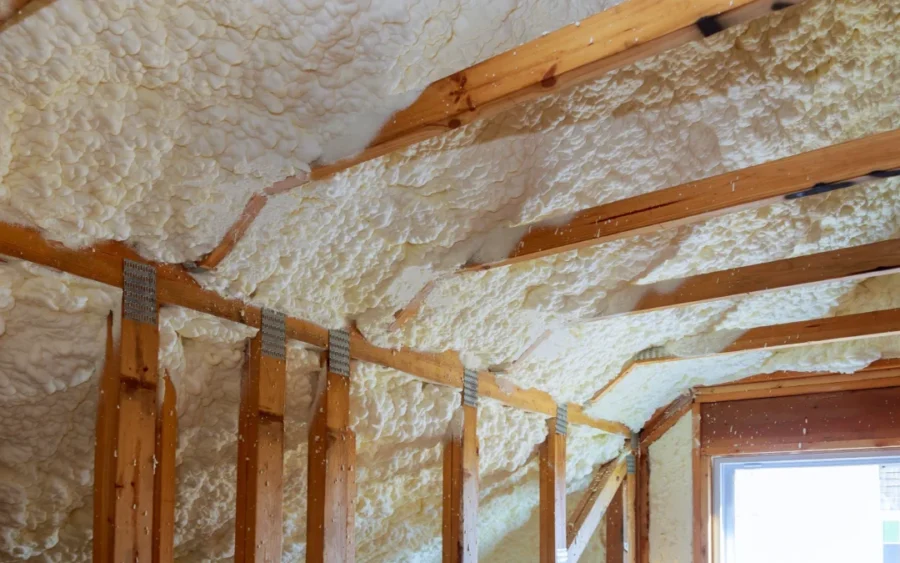
Spray foam insulation has long been promoted as a highly efficient and modern way to insulate dwellings. It offers increased energy efficiency, lower heating bills, and a comfortable indoor atmosphere. While these advantages are enticing, many property owners in the UK have discovered that spray foam is not always the greatest long-term option. In fact, in recent years, there has been an increase in demand for spray foam removal as homeowners encounter various issues with its installation. There are various reasons why you may need to have spray foam insulation removed from your property, including mortgage refusals and structural challenges, as well as health concerns and trapped moisture.
Mortgage and Valuation Problems
One of the most common reasons for spray foam removal in the UK is the effect it can have on mortgage approvals and property values. Many lenders and surveyors now see spray foam insulation, especially when placed to the roof area, as a potential concern. This concern derives from the difficulty of determining the condition of the underlying roof timbers after they have been sprayed with foam. The insulation creates a hard barrier, making it impossible to inspect the rafters for decay, dampness, or insect damage without cutting through the foam.
As a result, surveyors frequently identify the insulation as a flaw or an unknown danger, resulting in valuation reductions or outright mortgage refusals. Homeowners have been unable to sell or remortgage their properties until the insulation is professionally removed. In these circumstances, spray foam removal is required to restore the property’s full market worth and make it acceptable for financing again. This is not a trivial inconvenience, but rather a big financial and logistical challenge that many homeowners did not foresee when the insulation was first placed.
Roof Ventilation & Timber Damage
Another main reason for spray foam removal is damage caused by insufficient roof ventilation. Spray foam, whether open or closed cell, forms an airtight seal. While this appears to be effective in limiting heat loss, it can have unforeseen implications when applied to the underside of a roof. Traditional roof structures use natural airflow between the insulation and the roof covering to allow moisture to escape. When spray foam prevents this airflow, moisture can form, causing timber degradation over time.
Moisture trapped against roof timbers can cause rot, jeopardising the structural integrity of the roof. This condition typically develops gradually and may go undiscovered until considerable damage has occurred. Once dampness or rot has set in, the expense of repairing or replacing afflicted timbers can be high. Many homeowners first become aware of these issues after a surveyor identifies them during a property inspection. At that time, spray foam removal is the only practical method to prevent further damage and restore appropriate airflow.
Health and Indoor Air Quality Concerns
Another reason why some people opt to remove spray foam is for health reasons. Although spray foam insulation is generally considered harmless once fully cured, the chemicals employed during installation can occasionally emit odours or volatile organic compounds (VOCs) if not sprayed correctly. In circumstances where the foam was incorrectly prepared or sprayed in unsuitable settings, lingering fumes can irritate the eyes, nose, or throat and aggravate respiratory diseases like asthma.
Furthermore, by creating a sealed atmosphere, spray foam can hinder natural ventilation within a building, thereby trapping allergies, moisture, and pollutants. This can cause condensation, mould growth, and a decrease in indoor air quality in older homes that were never built to be totally airtight. Spray foam removal can help homes who are sensitive to these situations by restoring a more balanced and breathing environment.
Incorrect installation and quality issues.
Before installation, spray foam insulation must be applied precisely and assessed thoroughly. Unfortunately, not all installations adhere to professional standards. If the foam is sprayed excessively thickly, unevenly, or on unsuitable surfaces, it can cause a variety of difficulties. For example, expanding foam can deform roof tiles or plasterboard, whereas improper adhesion might cause the material to pull away from surfaces, diminishing its effectiveness. In some situations, the foam’s expansion can result in fissures in the ceiling or walls.
Spray foam cannot be easily changed or fixed if installed incorrectly. The only reliable approach to resolve these concerns is to completely remove the spray foam. Poor-quality installations are more common than people know, particularly when low-cost or untrained installers are used. Homeowners who uncover flaws in their insulation frequently find that removing and replacing the material with a more traditional insulation approach is the only safe and long-term solution.
Difficulty with future maintenance and repairs
Another sometimes neglected disadvantage of spray foam insulation is that it complicates future maintenance tasks. Roof inspections, electrical rewiring, and plumbing repairs become more difficult when foam is sprayed directly on rafters, tiles, or piping. Electricians and roofers may struggle to reach hidden locations, and any necessary repairs may require cutting through firm foam, which adds time and cost to the procedure.
Spray foam removal can be useful for properties that require regular inspections or are likely to be renovated. Clearing insulation from crucial places allows maintenance personnel to get access and ensures that future repairs or upgrades are completed safely and effectively. Homeowners planning to install solar panels or convert their lofts will discover that removing existing foam insulation simplifies the procedure.
Energy Efficiency Misconceptions
Many people select spray foam insulation because of the promise of increased energy efficiency. While it can help reduce heat loss, its overall performance is greatly dependent on good installation and the type of property. Spray foam can exacerbate dampness or ventilation concerns in some properties, particularly older buildings. Sealing a space too tightly might prevent the home from “breathing,” resulting in moisture buildup and diminished thermal performance over time.
Furthermore, energy savings are not usually as significant as stated, especially given the high installation costs and probable future issues. For these reasons, homeowners who expected a significant reduction in heating expenditures may be disappointed and seek spray foam removal to replace it with more permeable and stable insulating materials such as mineral wool or rigid foam boards. These options can still provide superior thermal performance while avoiding the same long-term hazards.
Condensation and Damp Problems
Condensation is one of the most common difficulties with spray foam insulation, especially in loft spaces. When warm, damp air from the living spaces below rises into the loft, it must leave via effective ventilation. If the underside of the roof has been thoroughly sealed with spray foam, moisture is retained and eventually condenses on colder surfaces. Over time, this can result in moist areas, discolouration, mould growth, and wood degradation.
In extreme circumstances, the foam may absorb and hold moisture, worsening the condition. Moisture can become trapped behind or within the foam, making drying practically impossible without removal. This is another instance when spray foam removal is required to restore a healthy balance of ventilation and avoid ongoing damp difficulties. Once removed, proper ventilation and alternative insulation can be installed to prevent a recurrence.
Property Resale Challenges
In today’s housing market, it can be difficult to sell a property with spray foam insulation. Many potential purchasers are aware of the concerns with spray foam and may regard it as a red flag. Even if a buyer is interested, their lender may refuse to approve a mortgage until the insulation is removed. This can result in delays, lost sales, or having to accept a cheaper offer.
Homeowners who want to sell quickly or for the best price often discover that spray foam removal is the most practical option. After the foam has been professionally extracted and the roof space assessed, the property can be sold without the stigma or hassles associated with spray foam insulation. This restoration work often pays for itself by making the sale go more smoothly and profitably.
Restoring Peace of Mind.
Finally, the choice to remove spray foam is frequently motivated by a need for peace of mind. Living with the possibility of concealed damage, health consequences, or property devaluation can be unpleasant. Removing the insulation reduces guessing and allows for a thorough visual evaluation of the roof structure. It also allows homeowners to select various insulation solutions that best suit the property’s individual requirements, assuring both comfort and long-term stability.
While spray foam insulation may still be useful in some industrial or commercial applications, its applicability for private properties—particularly conventional UK homes—is debatable. For many homeowners, the negatives have simply surpassed the positives. Whether the objective is to protect the property’s value, preserve structural integrity, or maintain a healthy living environment, spray foam removal is often a prudent and important move towards protecting your home in the long run.