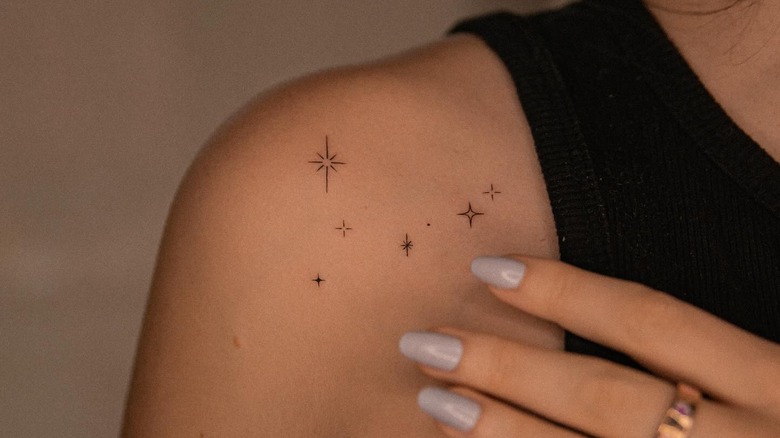
The tattoo industry has experienced a significant transformation over the past decade, shifting from a subculture characterised by bold, heavy-lined traditional aesthetics to a refined artistic landscape where subtlety and precision take center stage. Among the various styles that have gained immense popularity, fine line tattooing emerges as a distinct favourite among contemporary clients. Characterised by delicate aesthetics, intricate detail, minimalist designs, and ultra-thin line work, this style demands an exceptional level of precision and mastery. Nevertheless, in spite of its increasing demand, the educational framework of the industry has been sluggish in its adaptation. Traditional tattooing apprenticeships and generalised training programs frequently regard delicate line work as a lesser sub-discipline, rather than recognising it as the highly specialised craft that it genuinely is. To uphold exceptional standards of safety, artistic integrity, and longevity, there is a strong argument for the necessity of a dedicated course for fine line tattoo training.
To grasp the necessity of specialised education, it is essential to acknowledge the basic technical distinctions between traditional tattooing and fine line work. Traditional tattooing generally employs larger needle groupings, including five, seven, or nine round liners, which inject ink into a wider channel within the dermis. This method permits a wider margin of error concerning needle depth and speed, as thicker lines inherently offer more leniency. In sharp contrast, fine line tattooing depends on very small needle configurations, often using single needles or tight three-round liners. Working with such delicate equipment significantly alters the way the machine engages with human skin.
When an artist employs a single needle, the area that receives the pigment is minuscule. The pressure necessary for proper ink deposition without inflicting damage varies significantly from that required for a wide line. If an artist applies excessive pressure or inserts the needle even slightly too deep, the ink will disperse beneath the skin, resulting in an irreversible, blurry effect referred to as a blowout. On the other hand, if the artist works too cautiously to avoid a blowout, the ink may completely fade during the healing process, resulting in a faint or incomplete design. Mastering this narrow margin of acceptable depth demands concentrated, repetitive practice under the supervision of an expert. It is unrealistic to expect an aspiring artist to achieve this balance through a general course that encompasses everything from heavy tribal shading to bold traditional outline work. Enrolling in a specialised program, like a fine line tattoo course Manchester, offers students the concentrated attention needed to perfect these delicate mechanical adjustments.
In addition to needle depth and machine pressure, the physical characteristics of tattoo equipment significantly influence the execution of fine lines. Standard rotary and coil machines, despite their versatility, are frequently set up in configurations that are not ideal for delicate line work. Fine line tattooing requires careful voltage calibration, specific stroke lengths, and lightweight ergonomics to ensure stability during extended, intricate sessions. A focused curriculum allocates considerable time to analysing these technical variables. Students explore the relationship between motor speed and hand speed to produce smooth, continuous lines while minimising unnecessary skin vibration. Through an in-depth exploration of these mechanics in a fine line tattoo course in Manchester, trainees acquire the skills to choose and adjust equipment that is specifically crafted to reduce trauma while enhancing pigment retention.
Another important aspect that supports a specialised curriculum is the intricate nature of skin anatomy and the process of ageing. Skin is a vibrant, living organ that exhibits considerable variation across various regions of the body and among different people. A fine line design positioned on the inner forearm will experience a distinct healing and ageing process compared to the same design located on a finger, ribs, or ankle. Fine line tattoos, due to their lower pigment volume, are significantly more vulnerable to the natural processes of skin ageing, cell turnover, and sun exposure. An untrained artist may produce a stunning, sharp tattoo on their first attempt, yet it could smudge or completely fade within a year. A comprehensive training program extends well beyond merely instructing students on machine operation; it imparts knowledge on skin elasticity, cellular regeneration, and the long-term behaviour of ink. Trainees acquire the skill of spacing fine lines effectively during the design phase, ensuring that as the ink settles over time, the tattoo retains its clarity and sharpness, avoiding the risk of becoming an indistinguishable blur.
Additionally, client consultation and design modification for fine line work require a specialised skill set that generalised courses often do not address. Clients often come in with inspiration photos sourced from social media that showcase impossibly small text or intricate details. While these designs may appear stunning on a digital screen, they are not practical for application on human skin. Educating clients about what can realistically be achieved and maintained over time necessitates a thorough comprehension of tattoo longevity. Artists who have completed a thorough fine line tattoo course in Manchester possess the expertise to thoughtfully reinterpret client ideas, carefully scaling and modifying lines to guarantee that the final artwork retains its beauty for years to come, rather than just a few months.
Health, safety, and hygiene standards assume distinctive aspects within fine line practice. Due to the fine nature of the needles, skin irritation may not be immediately apparent during the procedure. This can lead to inexperienced artists repeatedly working over the same area of skin, resulting in unnoticed dermal trauma. Moreover, the aftercare instructions for fine line tattoos vary slightly from those for traditional tattoos. Delicate line work creates minimal scabbing, which means that heavy, occlusive ointments can inadvertently pull ink out of the skin or lead to breakouts that compromise the design. Dedicated courses offer specialised protocols for aftercare that specifically address minimal-trauma tattooing, guaranteeing the best healing conditions.
The commercial landscape of the contemporary tattoo industry highlights the necessity for specialised education. The demographic of individuals seeking tattoos has broadened significantly, with numerous first-time clients opting for subtle, elegant, and discreet designs instead of large, bold compositions. Studios nationwide are experiencing a surge in demand for artists capable of delivering precise and stable micro-tattoos. Artists who complete a fine line tattoo course in Manchester align themselves to directly address this market demand. By concentrating on this particular niche, students can accelerate their learning process, enhance their portfolio with carefully crafted pieces, and establish a reputation for dependability in a fiercely competitive market.
Critics of specialised courses frequently contend that traditional apprenticeships represent the sole legitimate pathway into the tattoo industry. While traditional apprenticeships have a rich history and continue to be invaluable for broad-based training, they can occasionally prove inefficient for artists seeking to specialise solely in fine line aesthetics. Conventional approaches frequently demand extensive periods of sweeping floors and mastering techniques that might not correspond with the artist’s desired specialisation. A structured and dedicated educational framework does not supplant the discipline of traditional training; instead, it modernises it by providing intensive, focused instruction that is entirely centred on the nuances of micro-pigmentation and delicate linework.
Ultimately, fine line tattooing transcends being just a trend or a slight variation of traditional tattooing; it stands as a distinct discipline that connects the realms of delicate fine art and precise dermal application. The margin for error is nearly non-existent, the physics of ink placement are distinctive, and the long-term behaviour of the artwork necessitates specialised knowledge. By acknowledging fine line tattooing as a unique category of body art that warrants its own specialised curriculum, the industry can enhance its overall standards of quality and safety. Participating in a focused program like a fine line tattoo course in Manchester equips aspiring artists with essential technical skills, anatomical knowledge, and artistic perspective to excel in this specialised craft effectively.